
- Trademarks & Designs
- Strategy & managementUnlock the potential of your brand portfolio
- SearchingScreening and clearance search with smart pre-selection
- RegistrationTailored support to maximise your brand potential
- WatchingMonitor rights efficiently and cost-effectively worldwide
- Monitoring & prosecutionProtect and enforce rights on- and off-line
- Renewals & recordalsFlexible renewal and recordal services
- Strategy & management
- IP consultingBrand development, audits, licensing, M&A, valuation/monetisation, contract management and more
- IP consulting
- Patents
- Solutions
- Trademarks & Designs
- Strategy & managementUnlock the potential of your brand portfolio
- SearchingScreening and clearance search with smart pre-selection
- RegistrationTailored support to maximise your brand potential
- WatchingMonitor rights efficiently and cost-effectively worldwide
- Monitoring & prosecutionProtect and enforce rights on- and off-line
- Renewals & recordalsFlexible renewal and recordal services
- Strategy & management
- IP consultingBrand development, audits, licensing, M&A, valuation/monetisation, contract management and more
- IP consulting
- Patents
- Solutions
- Contact
- About us
- About us
- About usProud to support iconic brands and innovative organisations worldwide
- Mission & visionDiscover how we are redefining IP management through dynamic, strategic and personalised services
- MilestonesExplore our history from our founding 135+ years ago to the present day
- Our offices18 offices and unique network of specialists delivers local expertise on a global scale
- Social responsibilityWe strive to positively impact the environment and the global community in which we work and live
- GovernanceInnovation, client focus and a passion for IP. Meet our management team
- About us
- Careers
- Log in
- About us
- About us
- About usProud to support iconic brands and innovative organisations worldwide
- Mission & visionDiscover how we are redefining IP management through dynamic, strategic and personalised services
- MilestonesExplore our history from our founding 135+ years ago to the present day
- Our offices18 offices and unique network of specialists delivers local expertise on a global scale
- Social responsibilityWe strive to positively impact the environment and the global community in which we work and live
- GovernanceInnovation, client focus and a passion for IP. Meet our management team
- About us
- Careers
- Log in

Trademark registration in Europe: Strategy considerations for US brands expanding across the pond
When considering territorial expansion, intellectual property (IP) is one of the most important factors for any business. Megan Baker offers advice to US brand owners on how to navigate the different systems for trademark registration in Europe.
An increasing number of US brands are expanding into the European market, driven by consumer demand and growing market opportunity. Intellectual property (IP) plays a crucial role for organisations seeking to make this transition. Your IP assets play a vital role in helping you expand effectively across borders and into new markets, as they secure your brand within that new market. They are also a vital part of any franchise.
If you are a US-based brand looking to expand into European markets, there are several crucial points to consider due to the differing jurisdictions and systems that exist in Europe.
Navigating the separate systems for trademark registration in Europe
The European trademark (EUTM) is administered and governed by the EU Intellectual Property Office (EUIPO). The EUIPO covers the entire EU, but EU member states also have their own national trademark registries. Therefore, an applicant can choose to file via the EUIPO (covering all member states) or nationally (covering a specific EU country only). If an applicant files in the latter, they are not barred from filing the former and vice versa.
Any European countries that are not members of the EU are not part of the EUIPO system, meaning trademark registration is only possible via national trademark registries. For example, registered trademarks in the UK are administered and governed by the UK Intellectual Property Office (UKIPO). These rights cover the UK as a whole, and there are no other alternative national rights in the UK (ie, there is no “Scottish trademark”, etc).
— The UK after Brexit
As most are aware, the UK left the European Union (EU) and the EUIPO, following Brexit. Any EU trademark rights that existed pre-Brexit were automatically cloned at the UKIPO into “comparable rights”. Likewise, when using the international system, protection in the UK is only afforded by designating the UK.
While the applicable laws remain similar, there are notable differences between the UK and EU systems, such as:

- Can be procedurally simpler (owing to less territorial scope)
- Seniority not possible
- Subject to objections based on UK rights only
- Recognises unregistered trademark rights (such as passing off)
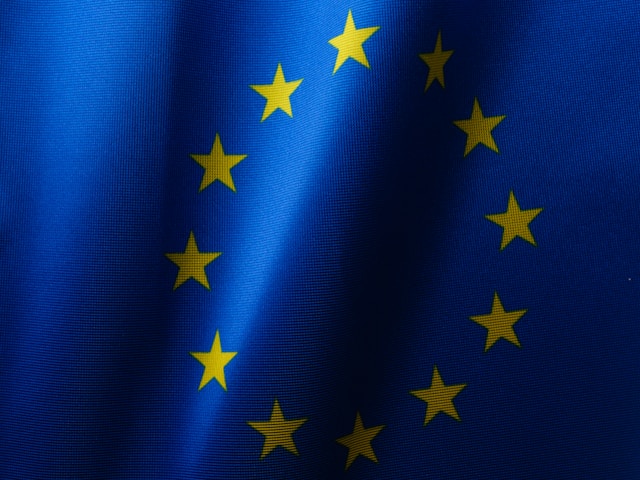
- Can be procedurally longer (owing to multiple member states that can object to application)
- Allows seniority claims from national applications (in member state territories)
- Unitary right (objection in one member state can mean the application as a whole will fail)
- Applies to registered rights only
— Ireland and the Irish border
Another consideration to keep in mind is Ireland. The Irish border means that protection is afforded by different systems:
- Republic of Ireland:
Covered by the EUTM or a national Irish trademark registration - Northern Ireland:
Covered by the UK
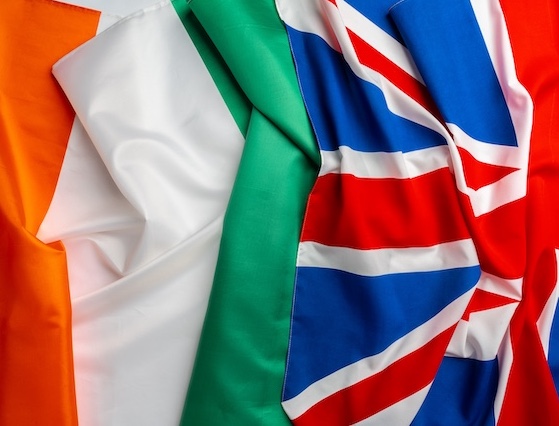

If you are looking to expand into the Irish market and plan to enter the markets on both sides of the border, you must first ensure that you have adequate registered IP protection in place and adhere to the rules of EU goods under the Windsor Framework, which oversees the flow of goods between the two territories.
When planning expansion into Ireland, it’s also important to pay attention to the rules on exhaustion. Post-Brexit, UK rights are exhausted if they are first put on the market in the UK or EEA (with the rights holder’s consent). However, goods first placed on the market in the UK do not exhaust EU rights; these are only exhausted if first placed on the market in the EEA.
In other words, goods that are first on the market in the Republic of Ireland will exhaust UK rights, whereas goods first put on the market in Northern Ireland will not exhaust EU rights. This is something to keep in mind when considering where you will distribute your goods when expanding into Europe.
Designing the right filing strategy: US or EU/UK and IR?
It is well known that the US Patent and Trademark Office (USPTO) requires absolute precision and clarity in its specifications. Often, US applications are rejected on the basis that the specification needs to be more defined, therefore limiting the scope of protection afforded to the exact good or service only.
Whilst the UK has encountered its own recent update on specification (thanks to Skykick), the UK and EU both offer more flexibility in allowing broader terms than the US. This could be an important consideration, especially when considering filing an international trademark registration (IR) via the Madrid System, administered by the World Intellectual Property Organisation (WIPO).
Basing an IR on a limited (eg, US) specification would be reflected in every designation you file, whereas filing broadly at the beginning (eg, in the UK/EU) provides the broadest specification for all designations. Whilst some territories may require some amendments to grant protection, applicants have a better chance of having broader protection from the outset.
This broader right would enable your business to build its IP expansion on that broader basis. Whether that’s by utilising the priority system and filing subsequent national applications, or as a base registration for an international application.
However, it is important to have the entitlement to use a base registration in the UK (and/or EU). As defined by WIPO, to have this entitlement, you must either:
- Be a national of a contracting party state or a state member of an intergovernmental organisation that is a contracting party (eg, the EU), or
- Have domicile in a contracting party state or an intergovernmental organisation that is a contracting party, or
- Have a real and effective industrial or commercial establishment in the territory of a contracting party state or in a state part of an intergovernmental organisation that is a contracting party.
While (i) and (ii) are self-explanatory, establishing a ‘real and effective industrial/commercial establishment’ can be more challenging. While WIPO does provide some guidelines, it is ultimately down to the contracting parties to determine if an applicant has a real and effective industrial/commercial establishment. To be genuine, the establishment must not be fraudulent or fictitious; it must be a place where industrial/commercial activity actually takes place (rather than being a mere warehouse); and, while it does not need to be the head office of a business, a mere PO box will not suffice.
If you are a business looking to expand into the European market and would like advice on the best trademark registration strategy for protecting your IP in Europe, please do not hesitate to contact us.